Monday, 28 May 2012
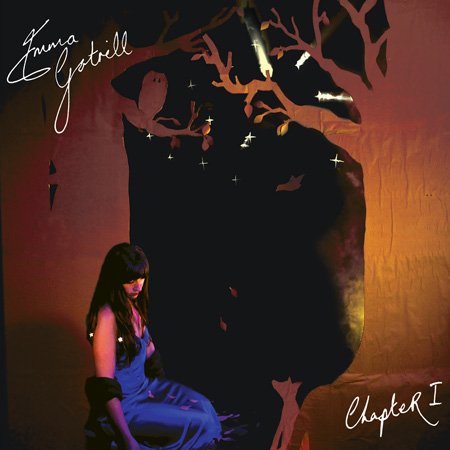
REVIEW: Emma Gatrill - Chapter 1
*Originally published for For Folk's Sake (22/5/12)
Musicians, like film stars and television broadcasters, are some of the most important cultural icons in history. Furthermore, instruments can carry as much, if not more, powerful symbolism than musicians themselves. Take the electric guitar, for example, and Jimi Hendrix and Eric Clapton spring to mind. Or the piano: Elton John and Stevie Wonder. Or even the wobble board and, you guessed it, Rolf Harris pops up. In folk music, one of the prime instruments is of course the acoustic guitar (Neil Young, Bob Dylan, Joni Mitchell and Laura Marling are all a dab hand at it) but what about the harp?
It’s not so common, Joanna Newsom aside, for this instrument to be the centrepiece, yet it has as much merit. It’s also what really makes Emma Gatrill’s debut album, Chapter 1, stand out so much. Within moments of listening, it’s clear that Gatrill is substituting the traditional folk guitar for the harp and it’s to no detrimental effect. ‘Hold On’ allows the harp strings to flutter around Gatrill’s soft soprano vocals like a gently strum acoustic with a deeper mystique. It’s enjoyable to hear something different in a landscape where countless twee singer-songwriters have guitars glued to their fingertips.
Gatrill’s voice is as equally captivating as her instrument of choice. Her quivering vocal always feels as if it’s just about to break; thawing at the higher notes in ‘Twisted Threads’ or cooing unpredictably in ‘Black Dog’. Gatrill’s known association with Rachel Dadd is completely understandable here; both artists trick the listener into thinking their voices will give way at any second while knowing they have complete control.
Away from the harp and the vocals lies a host of other instruments. Acoustic guitars feature quite prominently in ‘Josephine’ and ‘Squiggles and Balloons’, with guitar and harp interlocking in the former as violins paint Gatrill’s fairy tale battles in the air. The guitar holds a real intimacy in ‘Squiggles and Balloons’ and it’s easy to conjure an image of Gatrill at a friend’s kitchen table, swaying to the strokes of the acoustic and singing her Alice In Wonderland-like lyrics: ‘monkeys climbing brambles, elephants on motorbikes, turtles twist with me and you.’
The free rhythms of the majority of the songs on Chapter 1 are counteracted in ‘Jobe’ where drum rim taps and finger-clicks create wonderfully syncopated rhythms. Minor notes flux between the harp and the guitar and harmonies echo sounds of the occult. The movement in this track also breaks the album up at a clever point; some of the earlier songs’ liberal rhythms can become, paradoxically, a bit repetitive and stale.
‘The Birds’ has a darker, archaic feel, where Gatrill talks of lust and unrequited love: ‘I’m in love with a man whose wild heart runs free, I’m in love with a man who doesn’t love me.’ The literary references again come thick and fast, bowing down to the album’s apt title, with a brooding Heathcliff character running between Gatrill’s harp strings.
Towards the end of the album lies ‘Soul Lovers’ with its sickly-sweet lyrics but charming musical texture and melody. Grave strings add depth to the airy, alternating harp rhythms and Gatrill litters the song with erratic notes that are strangely pleasant to listen to. She allows the music to run in a stream of consciousness like a poet’s mind to paper, and this musical freedom is inspiring and truly demonstrates Gatrill’s creative talent overall.
With the harp at its core, Chapter 1 will unquestionably get people thinking about the ways in which different instruments can be used in folk music. The harp will not suddenly become the genre’s iconic instrument, but it should put Gatrill on the map. And deservingly so, too, because Chapter 1 is a sterling debut effort.
Tuesday, 8 May 2012
FEATURE: Idles
*Originally published for The Generator's 'Tipping Point' blog (8/5/12)
It’s not often that I come across a band who are as to the point as Idles are. The upcoming Bristol 5-piece aren’t huddled away in the crevasses of cyber-space, but are right out in force with a recent support slot for London psych-rockers S.C.U.M and a superb website that tells you everything from the band’s history to their influences and interests (hurrah for music journos)! But it’s their music that really shouts out loud; post-rock creations laden with rugged guitars, chunky basslines and raucous vocals.
New song, ‘Meidei’, taken from their forthcoming EP ‘Welcome’ (out August 6th), is completely wrapped up in these aforementioned sounds. High-hats chomp on chugging basslines, while vocalist Joe Talbot screams over needle-sharp guitars that splutter with distortion. You can definitely nit-pick out the obvious Walkmen, Buzzcocks and edgy Joy Division influences, but Idles swallow them whole and regurgitate a rather compelling sound that is full of their own gritty energy.
'Meidei' is also strange to listen to because it features just guitars, bass, drums and vocals – there are no glockenspiels, casio keys or kitchen utensils here to make the sound (used by many, but not exclusively to those uber-cool hipster types) - but this isn't a problem. It's modern rock ‘n’ roll at its best and the band are surely set for a bright future.
(Tip for The Generator comes courtesy of Sam Betts at Fear Of Fiction).
Thursday, 3 May 2012
PREVIEW: Bestival 2012
*Originaly published for The Courier (30/4/12)
Where? Robin Hill Country Park, Isle of Wight
When? September 6-9
How much? £170 for students
Who'll enjoy it? The wary student who wants good value-for-money, or the all-encompassing hippy who wants to frolic in a pixie costume
This year sees another incredibly eclectic line-up, with headline performances from New Order, The XX, Sigur Rós and the one and only, Stevie Wonder.
Other acts include: Spiritualised, Friendly Fires, Bat For Lashes, Major Lazer, Annie Mac, Gary Numan, The Horrors, Azealia Banks, SBTRKT, Orbital, Earth Wind and Fire experience feat. Al Mckay, Django Django, Warpaint, Four Tet, B2B, Caribou, Gold Panda, Adam Ant & The Good, Little Dragon, De La Soul, Lucy Rose, John Talabot, Justice, Alabama Shakes, Lianne La Havas, 2ManyDJs, Daughter, Grimes, Friends, Clock Opera, Zulu Winter, Errors, First Aid Kit, Chairlift, Field Music, Porcelain Raft, Gallows and loads more!
This student, family or just about anyone-friendly independent music festival is curated by Josie and Rob da Bank, who are passionate about creating a unique festival atmosphere without having to sacrifice a solid line-up. Aside from the music performances, there are reams of other events going on and plenty of wacky places to explore, with a Bollywood Cocktail Bar, Roller Disco and the Wishing Tree Stage to name a few examples.
Traditionally, festival-goers don fancy dress and as the organisers put it, the festival is ‘a wondrous world of discovery and adventure that will inspire peace, love and dancing, not only in September but all year round…’
Thursday, 26 April 2012
REVIEW: James Yorkston And The Athletes - Moving Up Country [Reissue]
*Originally published for The 405 (25/4/12)
2002. The birth of reality TV talent contests such as Pop Idol, number one singles from Daniel Bedingfield and Girls Aloud and the untimely death of The Clash's Joe Strummer. Little did I know as an oblivious 12 year old that among these musical events there was a burgeoning micro-indie record label and group of musicians called the Fence Collective. Founded by Kenny Anderson of King Creosote in 1997, Fence Collective was to later have the likes of such great artists as Lone Pigeon, Françoise And The Atlas Mountains and a quietly confident singer-songwriter, James Yorkston, nestled in its arms.
In 2002, Yorkston (with musical backing from The Athletes) released his critically-acclaimed debut album, Moving Up Country under Domino Records and this year the label are marking its 10th anniversary with a reissue of the album; replete with bonus songs and Peel session recordings as part of a double CD/vinyl package.
Time and time again, Yorkston has been affiliated with folk music. This has been accelerated no less by releases of albums like Folk Songs (2009) but truth be told, he is a more general roots man; country, blues and folk can all be quite easily picked out on Moving Up Country (not to mention splices of gospel and even some jazz). It is the album's myriad of sound that won Yorkston his die-hard fans and has been pulling in new listeners ever since.
Album opener, 'In Your Hands', is a potent example of this. Deep accordion notes sit below Yorkston's imperfect but charming vocal, and a harmonica and a light blues guitar, among other instruments, caress the narrative about a day spent giving undivided attention to a lover. '6.30 Is Just Way Too Early' is similar in its domestic story-telling, "I find myself down the stairs/Lazy dog gives me the eye/And I drag our bones around the barns/And catch the morning light," but a stuttering and spluttering organ shifts the song from comfortable acoustics to sonic gospel terrains.
There is a timeless quality to the songs in Moving Up Country, like the rich acoustic that walks in hand with the soothing vocals and scratchy fiddles in 'St Patrick', or the fast-paced jazz piano, rippling snare and early rock 'n' roll jaunt of 'I Spy Dogs' – it feels like you have heard these songs before. The talent with which Yorkston and his Athletes revisit, explore and reinvent genres is astounding.
It is then barely excusable to downplay the albums' lead single, 'Moving Up Country' – the very song that caught the eye of John Peel and convinced John Martyn to take Yorkston on his full Winter tour in 2001 – but where songs like 'The Patient Song' worm their way into your ears with warped blues keys and bouncy reverb guitars, 'Moving Up Country's' obtrusive harmonica and repetitive melody just leaves you tired. Thankfully, this is not the case for the overwhelming majority of the songs on the double album and this is what makes it so rounded and impressive.
Disc two holds demos of some of Yorkston's finest songs on Moving Up Country, but it does suffer a little for the more basic production, as can often be expected with demos. The harmonies on 'The Patient Song' are less refined and the harmonica in '6.30 Is Just Way Too Early' is quite grating here, but it is strangely wonderful to hear how the kinetic energy of 'I Spy Dogs' used to be stored before it was unleashed later in its studio version.
Some of the bonus demo tracks like 'Worthy Souls' and 'My Distance Travelled' are truly enthralling; yawning slide guitars, grumbling double-bass and tinny, roll-snap drums dancing together in unrivalled freedom. Another strong contester from the bonus tracks is 'La Magnifica' with its burgeoning acoustics and plucked violin strings tiptoeing around the track's edges, but it is the 'Tender To The Blues' Peel recording that elevates itself above the rest. The descending string progression, melancholic harmonies and sinew-yanking minor notes sound just as, if not more, extraordinary live than on the original recording. The track's multifaceted texture is a true microcosm of James Yorkston and The Athletes' remarkable musical dexterity.
Moving Up Country is the kind of album that has and will continue to introduce people to styles of music that they thought they didn't like. Yorkston has an envious and somewhat confusing ability to pen songs that transcend genres, yet still beam his style from start to finish. The reissue is a treat for anyone who appreciates the difficulty of this; wants their hands on rarer Yorkston material; or is willing to open their mind to a variety of musical styles that sound as timeless and as a fresh as they did a decade ago.
9/10
Wednesday, 25 April 2012
REVIEW: Sea Of Bees - Orangefarben
*Origininally published for the Oxford Music Blog (24/4/12)
Often, the simplest songs in music are the most enthralling. An unassuming, three chord structure with an infectious vocal melody can be as compelling as an improvisational jazz piece or Hendrix’s ‘Electric Ladyland’. But when someone as gifted as Sacramento multi-instrumentalist, Julie Ann Bee (aka Sea Of Bees) fails to match their arresting vocals with equally-arresting song structures, you realise that talent can be wasted a little on simplicity.
Two songs into Orangefarben, ‘Take’ hears the sleepy acoustics and lyrics of love, lust and heartbreak that dominate the rest of the album. ‘Gone’ follows a similar pattern, albeit for an attractive phaser guitar effect, but it is not vastly different in sound from its predecessor. This gentle folk rock is part and parcel of Sea Of Bees’ sound (evident in her previous album Songs For The Raven) and there is, of course, nothing wrong with this. What is perplexing, however, is that Ms Bee has astonishing vocal drive, ability and emotional give, yet a lot of her music in Orangefarben lacks such ambition.
Thankfully, there are moments on Orangefarben that do startle. ‘Broke’, for instance, has all the ingredients to rival Sharon Van Etten’s ‘Give Out’ with it close guitars and crumbling vocals, and ‘Teeth’ is a vivid lament for falling in love with the wrong person, tinged with slick country guitars and drums that punch regrets head-on, “And I know I shouldn’t think those thoughts and I’ve gone ahead and thought those thoughts.”
Further still, Ms Bee and co’s cover of John Denver’s ‘Leaving On A Jet Plane’ (shortened to ‘Leaving’) is just as emotive and rhythmically animated as ‘Teeth.’ Sampled, shuffle-pop drums loop around biting acoustics and Bee’s layered harmonies are at their most dexterous and astounding here. Stand-out track, ‘Alien’, clocks in just before the album’s close; storming ahead with whizzing keys, defiant guitars, cracking wood blocks and distant vocals that scream a lover’s betrayal. It’s surely a crowd-pleaser live and adds much-needed variety and spice to the album at a pivotal point.
This assortment of sound is what can be heard initially on ‘Give’ (earlier in the album) and in ‘Grew’ at the album’s close. The former carries a jovial bass line with unpredictable beats and muted guitars, but before long the cuddly, star-twinkling melodies that saturate the album return and strip the song of its individuality. ‘Grew’ does emit a more experimental sound with grinding electronics, ethereal synths and mournful vocals, but, unfortunately, it fades into the background and is quickly forgotten.
Orangefarben is not without its share of solid songs, nor is it spared of its mediocre ones. It is a record lyrically charged with all the emotions of a shattered relationship and Julie Ann Bee couldn’t wear her heart more on her sleeve. But musically, it lacks the spark that no one can deny she can fuse. An ambitious sophomore effort perhaps wasn’t on the agenda, but it is exasperating that Bee has primarily dotted her artistic palette with shades that do not show off her full, vibrant colours.
Thankfully, there are moments on Orangefarben that do startle. ‘Broke’, for instance, has all the ingredients to rival Sharon Van Etten’s ‘Give Out’ with it close guitars and crumbling vocals, and ‘Teeth’ is a vivid lament for falling in love with the wrong person, tinged with slick country guitars and drums that punch regrets head-on, “And I know I shouldn’t think those thoughts and I’ve gone ahead and thought those thoughts.”
Further still, Ms Bee and co’s cover of John Denver’s ‘Leaving On A Jet Plane’ (shortened to ‘Leaving’) is just as emotive and rhythmically animated as ‘Teeth.’ Sampled, shuffle-pop drums loop around biting acoustics and Bee’s layered harmonies are at their most dexterous and astounding here. Stand-out track, ‘Alien’, clocks in just before the album’s close; storming ahead with whizzing keys, defiant guitars, cracking wood blocks and distant vocals that scream a lover’s betrayal. It’s surely a crowd-pleaser live and adds much-needed variety and spice to the album at a pivotal point.
This assortment of sound is what can be heard initially on ‘Give’ (earlier in the album) and in ‘Grew’ at the album’s close. The former carries a jovial bass line with unpredictable beats and muted guitars, but before long the cuddly, star-twinkling melodies that saturate the album return and strip the song of its individuality. ‘Grew’ does emit a more experimental sound with grinding electronics, ethereal synths and mournful vocals, but, unfortunately, it fades into the background and is quickly forgotten.
Orangefarben is not without its share of solid songs, nor is it spared of its mediocre ones. It is a record lyrically charged with all the emotions of a shattered relationship and Julie Ann Bee couldn’t wear her heart more on her sleeve. But musically, it lacks the spark that no one can deny she can fuse. An ambitious sophomore effort perhaps wasn’t on the agenda, but it is exasperating that Bee has primarily dotted her artistic palette with shades that do not show off her full, vibrant colours.
5/10
Friday, 20 April 2012
FEATURE: Is streaming the new buying?
*Originally published for Fresh On The Net (20/4/12)
Yesterday BBC Radio 1 released figures from the BPI and Official Charts Company that show a 25% decrease in CD sales from 20.5 million in the first three months of 2011, to 15.3 million this year. Digital sales are instead increasing and account for almost a third of all albums sales.
Regardless of the rise in digital sales, Music Week has revealed that weekly album sales have plummeted to a record 21st century low: ‘Overall album sales are 27.62% down week-on-week at 1,446,218 – that is 23.19% below same week 2011 sales of 1,882,878, and lower than in any of the 640 previous weeks that have elapsed in the 21st century.’ While music is being shared and accessed more easily via streaming platforms such as Spotify, it is not being paid for as much by fans. Streaming is essentially the new buying.
Last month, my friend treated me to a month’s premium subscription to Spotify for £10. Until then, I had been using the Spotify free package to preview albums before buying them (habitually, in CD format). I have been more than satisfied with Spotify’s allocation of five listens maximum per song and the adverts haven’t bothered me too much.
What my companion couldn’t get his head round, however, is why I do not choose to spend just a tenner a month to avoid advertisements, enjoy unlimited listening, stream music on my smartphone and listen to songs in higher audio quality. Irritated by my stubbornness, he bought me a month’s subscription to see if I could be swayed.
Sure, the unlimited streaming was great and the smartphone service was pretty slick, but something that I had previously highlighted to my friend cropped up; in that month, I did not feel as inclined to buy a new album (CD format, mp3 format, whatever) because I felt like I already owned a bunch of new ones in quasi-tangible form.
It really frustrated me that the £10 subscription had not actually resulted in me owning any new music. Yes, I had access to thousands of songs streaming on my computer and phone, but I couldn’t burn song files onto a CD for my car, nor transfer the files for the purposes of my radio show. Buying music from Spotify at an additional price would have of course enable me to do this, but with the tenner already gone on the subscription, I was strapped of the money that I would have bought a new album with that month. So, I returned to Spotify free.
What I prefer about the free version is that it limits your listening to five plays. I think it’s a fair deal considering that you are using it on a free basis. If you have listened to an album 5 times then that’s a) probably because you like it and b) if so, it’s about time you actually owned the album. Spotify free encourages me to keep doing what I have always done; pay for the privilege of owning music and enables me to do something that I couldn’t do a few years ago; preview and explore more music. The listening cap on Spotify free means that I truly realise what’s worth buying and what’s not. While the free version, paradoxically, does not save me money, at least I am the owner of something real at the end of the month.
Whether you buy CDs, buy music off iTunes/Spotify, or stick to vinyl (the latter of which has seen a 20% increase in sales according to Nielsen SoundScan – good news for Record Store Day) what is undeniably true is that people are not putting as much money towards music. The £10-a-month subscription to Spotify is some payment, but it is merely a small token in exchange for unlimited listening.
I think streaming on a premium basis is deterring a lot of people from buying music at its true value and the aforementioned decrease in album sales are likely attributed to this. Sadly, I’m sure it won’t be long before BPI and the Official Charts Company reveal another record low in album sales.
Yesterday BBC Radio 1 released figures from the BPI and Official Charts Company that show a 25% decrease in CD sales from 20.5 million in the first three months of 2011, to 15.3 million this year. Digital sales are instead increasing and account for almost a third of all albums sales.
Regardless of the rise in digital sales, Music Week has revealed that weekly album sales have plummeted to a record 21st century low: ‘Overall album sales are 27.62% down week-on-week at 1,446,218 – that is 23.19% below same week 2011 sales of 1,882,878, and lower than in any of the 640 previous weeks that have elapsed in the 21st century.’ While music is being shared and accessed more easily via streaming platforms such as Spotify, it is not being paid for as much by fans. Streaming is essentially the new buying.
Last month, my friend treated me to a month’s premium subscription to Spotify for £10. Until then, I had been using the Spotify free package to preview albums before buying them (habitually, in CD format). I have been more than satisfied with Spotify’s allocation of five listens maximum per song and the adverts haven’t bothered me too much.
What my companion couldn’t get his head round, however, is why I do not choose to spend just a tenner a month to avoid advertisements, enjoy unlimited listening, stream music on my smartphone and listen to songs in higher audio quality. Irritated by my stubbornness, he bought me a month’s subscription to see if I could be swayed.
Sure, the unlimited streaming was great and the smartphone service was pretty slick, but something that I had previously highlighted to my friend cropped up; in that month, I did not feel as inclined to buy a new album (CD format, mp3 format, whatever) because I felt like I already owned a bunch of new ones in quasi-tangible form.
It really frustrated me that the £10 subscription had not actually resulted in me owning any new music. Yes, I had access to thousands of songs streaming on my computer and phone, but I couldn’t burn song files onto a CD for my car, nor transfer the files for the purposes of my radio show. Buying music from Spotify at an additional price would have of course enable me to do this, but with the tenner already gone on the subscription, I was strapped of the money that I would have bought a new album with that month. So, I returned to Spotify free.
What I prefer about the free version is that it limits your listening to five plays. I think it’s a fair deal considering that you are using it on a free basis. If you have listened to an album 5 times then that’s a) probably because you like it and b) if so, it’s about time you actually owned the album. Spotify free encourages me to keep doing what I have always done; pay for the privilege of owning music and enables me to do something that I couldn’t do a few years ago; preview and explore more music. The listening cap on Spotify free means that I truly realise what’s worth buying and what’s not. While the free version, paradoxically, does not save me money, at least I am the owner of something real at the end of the month.
I think streaming on a premium basis is deterring a lot of people from buying music at its true value and the aforementioned decrease in album sales are likely attributed to this. Sadly, I’m sure it won’t be long before BPI and the Official Charts Company reveal another record low in album sales.
Friday, 13 April 2012
REVIEW: Mesita - The Coyote
*Originally published for The 405 (13/4/12)
You know that tip-of-the-tongue familiarity that you get when listening to music? That teeth-grinding frustration that eats into your daily routine? This is what happens when you delve into Mesita's latest release, save for the unclenched teeth. The Coyote constantly jumps between syncopated Radiohead rhythms, darting Efterklang melodies, bluesy Black Keys riffs and airy Bon Iver falsettos, to name but a few comparisons. It seems as if all of these artists, and more, have been soaked up by James Cooley (under his moniker, Mesita) – a bedroom producer and multi-instrumentalist from Colorado, USA. Not only is Cooley a bit of a musical mastermind, but a sponge who effortlessly squeezes out perfect pop song-shaped suds.
The first few tracks are driven by infectious guitars that lock you into listening. ‘William Cannon‘ and ‘The Coyotes‘ seem to be in a race with Tunng and Hockey; with off-beat strums, glittering harmonies, puckered acoustics and Indonesian gamelan sounds that radiate a balmy joy. ‘Onward Upward‘ is bossed about by a heavy beat that stomps on Spanish guitars and Broken Bells-esque stereo vocals.
‘The Front Range‘ and ‘Out For Blood‘ introduce a more sinister sound at the album‘s core. The ringing root notes and hurtling drums in the latter thump as loudly Arcade Fire‘s ‘Ready To Start‘ and Cooley‘s sexy, unshaven vocal glides over gorgeous desert rock riffs. ‘The Front Range‘ is the sunny lovechild of Radiohead‘s ‘Weird Fishes/Arpeggi‘ and ‘Bloom‘, with unpredictable, swelling snare rolls and dissonant bass notes.
What is so engaging about The Coyote, apart from pin-pointing all its influences like an excited child, is its meticulous structure. Where ‘Out For Blood‘ and ‘The Front Range‘ build on the glossy sounds of the opening tracks, ‘Into The Wind‘ marks the beginning of the record‘s dark final stages. The track embodies a startlingly different sound, with muted distortion, snake-rattle drums, spliced samples, ebow bends and fuzzy electronics. Just as you are starting to adjust your ears, Cooley suddenly brings in bouncy lounge music and your eyes pop with disbelief. Does he manage to pull this dramatic song change off? Absolutely.
Cooley even makes room for some hardcore music, albeit in a skewed sense. ‘You Or The City‘ has all the ingredients for neck-thrashing and pig-snorted screams, but the pitchy guitars are too compressed and, quite disappointingly, the song doesn‘t reach the climatic point that you want it to.
It is ‘Endless Build Into Nothing‘, with its ironic title, that achieves everything that ‘You Are The City‘ fails to. Starting with a soothing guitar and hushed vocals, a colourful guitar gradually lifts Cooley‘s hook, "future distant, endless build into nothing," before gospel organs, bleating guitars, monstrous drums and ghostly vocals bellow at the peak of the crescendo.
Mesita‘s latest LP is an entrancing medley of genres from all parts of the globe, and James Cooley manages to stitch everything together with his relentless nack for melody. The Coyote is a bustling pop record that gets right to the point and doesn‘t care what influences it drags along with it, because without them it wouldn‘t be half the informed and astonishing record that it is.
8/10
Subscribe to:
Posts (Atom)


