*Originally published for The Line of Best Fit (9/10/13)
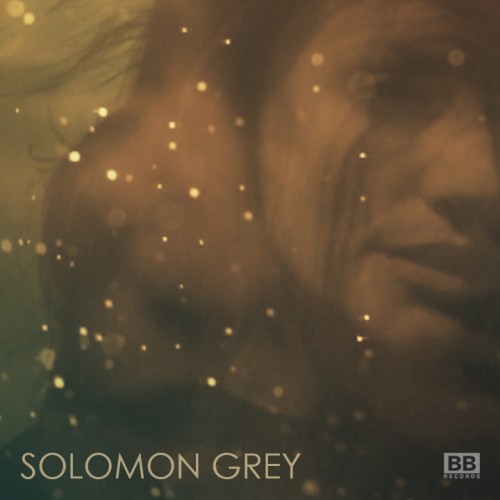
Electronica duo Solomon Grey are re-releasing their unbearably catchy single ‘Firechild’ ahead of their debut live performances next month.
Judging by the sound of their 80s krautrock-meets-modern pop, the twosome will be throwing quite a party at their first live shows. ‘Firechild’ hears juddering, spacey synths provide a comfortable bed for smug falsettos and spanking-clean string progressions. It’s danceable, likeable pop that sounds damn sure of itself.
Catch the English-Australian duo at The White Building, Hackney on 20 and 21 November.
Monday, 14 October 2013
Tuesday, 8 October 2013
LISTEN: Woman's Hour - Darkest Place [Oceaán remix]
*Originally published for The Line of Best Fit (7/10/13)
Oceaán caught our attention earlier this year with the smooth and silky ‘Need U’. Now the Manchester producer delivers a delicate remix of ‘Darkest Place’ by electronic minimalists, Woman’s Hour.
There is a
real sense of partnership in Oceaán’s reworking of ‘Darkest Place’; Fiona
Burgess’ naked vocals swim fluidly between “Oliver Cean”'s soulful hums. Finger
snaps build to scurrying rhythms and harmonies glint in the background.
What is so
attractive about the remix is that the original is instantly recognisable –
just kissed with a new warmth – likely found basking in clubbers’
afterglow or accompanying late-night drives.
Monday, 7 October 2013
LISTEN: Blood Cultures - Indian Summer
*Originally published for The Line of Best Fit (7/10/13)
It's tempting to give artists the silent treatment when internet bios are intentionally sparse, but in the case of elusive New Jersey soloist, Blood Cultures, it'd be plain rude.
Put simply, the debut offering from the synth-pop artist is too good to miss. Opening with groovy, palm-muted guitars akin to what we've heard so far from Jai Paul, 'Indian Summer' quickly journeys into explosive synth-pop territory.
Off-kilter, vacuous vocals climb pentatonic scales on top of brash – if not a little cheesy – synths that nod to Europop. It sounds more like it's been washed up on the shores of Sweden than New Jersey, no more than a pebble stone's throw away from Iamamiwhoami.
It's tempting to give artists the silent treatment when internet bios are intentionally sparse, but in the case of elusive New Jersey soloist, Blood Cultures, it'd be plain rude.
Put simply, the debut offering from the synth-pop artist is too good to miss. Opening with groovy, palm-muted guitars akin to what we've heard so far from Jai Paul, 'Indian Summer' quickly journeys into explosive synth-pop territory.
Off-kilter, vacuous vocals climb pentatonic scales on top of brash – if not a little cheesy – synths that nod to Europop. It sounds more like it's been washed up on the shores of Sweden than New Jersey, no more than a pebble stone's throw away from Iamamiwhoami.
Friday, 4 October 2013
LISTEN: Fractures - Cadence
*Originally published for The Line of Best Fit (4/10/13)
Australian producer/multi-instrumentalist Fractures returns with drugged RnB months after nursing, ironically, a fractured neck.
The solitude caused by such an incident can be a blessing for creativity, mind. New single 'Cadence' perfectly embodies the frustrations of unrequited love: cyclical motions, yearning vocals and a bass that's far too hot to touch. The opening keys draw parallels to 70s funk clavinet, but the track is soon engulfed by downtempo not unlike that of electro-soul crooner, Jamie Woon.
While it could be a bit brighter on the production side, it gives us a nice peek into his debut EP set for release in early 2014.
Australian producer/multi-instrumentalist Fractures returns with drugged RnB months after nursing, ironically, a fractured neck.
The solitude caused by such an incident can be a blessing for creativity, mind. New single 'Cadence' perfectly embodies the frustrations of unrequited love: cyclical motions, yearning vocals and a bass that's far too hot to touch. The opening keys draw parallels to 70s funk clavinet, but the track is soon engulfed by downtempo not unlike that of electro-soul crooner, Jamie Woon.
While it could be a bit brighter on the production side, it gives us a nice peek into his debut EP set for release in early 2014.
Thursday, 3 October 2013
LISTEN: Lupa - The Creature
*Originally published for The Line of Best Fit (3/10/13).
Fifteen-year-old Lupa knows a thing or two about fusing organic sounds with tender electronica.
The Sydney-based artist (real name Imogen Jones) cites Daughter
and Grimes amongst her influences and that folk-meets- electronic sound is prevalent
in new song, 'The Creature'. Crystalline vocals and plucked violins drip-feed
into snapped beats, reaching an enchanting climax just shy of the four minute
mark. What lies at the heart of the track is its clever simplicity - descending
scales looping with repetitive beats - thanks in part to Miss Jones' classical music
background. Trained musicians will be the first to tell you less is more.
Aussies triple j love her, and we might just
a bit too.
Monday, 3 June 2013
FEATURE: All We Are
*Originally published for The Tipping Point (3/2/13)
One of life’s greatest pleasures, perhaps only for music nerds, is pinpointing a band’s music influences and realising the comparisons are accurate. Take the latest single from Liverpool’s All We Are, who were first tipped last year. Within five seconds of listening to ‘Utmost Good’ I’ve scribbled “sleepy Bee Gees” and within five seconds of googling it appears the three piece liken themselves to “the Bee Gees on diazepam.” Get in. Admittedly, my tone-deaf nanna could spot the link.
‘Utmost Good’ oozes funk from every drugged beat or wah wah bass note, supplemented by biting falsettos that really would raise the Gibbs’ eyebrows. The track’s drowsy ostinato is addictive and great company for a lazy Sunday afternoon, especially with the summer months looming. It’s Unknown Mortal Orchestra at their most laid back, though fashions a more distilled sound, and it’s a delight to hear.
Catch the Liverpool lot at The Seabright Arms on 17th June.
*Tip courtesy of Phil from Not Many Experts
Sunday, 19 May 2013
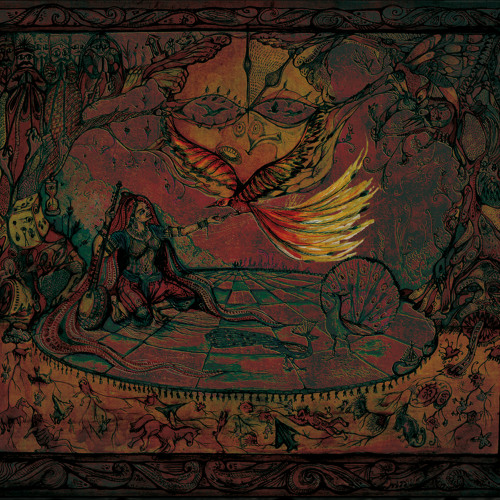
REVIEW: Shama Rahman - 'Fable: Time'
*Originally published for Artrocker (29/4/13)
Shama Rahman leads a rather busy life as a PhD student of musical creativity, actor, storyteller and musician, and it's obvious in her music. From the instruction to listen to Fable: Time on shuffle, to playful and original world music fusions, nearly every part of the record is cloaked in experiment, drama and metaphor. But does it work?
Fable: Time is meant to be listened to in any order to help realise "how time affects us, its illusions, deceptions and myths", leaving all song titles in an equally-muddled state. This freedom is an interesting experiment - not quite the boldness of a Gwilym Gold innovation - but works tastefully as an extended metaphor for the theme of time.
Faux-opener, 'Reflections' (merely the first track downloaded)is a strange little number. Elementary piano notes thump around salsa rhythms and warm brass, whilst Rahman sings in rather erratic waves. The variable beat patterns are admirably creative, but it's a real effort trying to catch the slippery thing.
Next in the lucky dip is 'Coast', but luck isn't playing fair today. Aquatic guitars swash about in a pool of horribly distorted instruments and Rahman's vocals fail to interlock with the intricate sitar, double bass and drum arrangements. Perhaps that's the point.
'Time' finally shows off the talent that Gilles Peterson and the like have so raved about. A lone sitar floats above Rahman's gorgeous otherworldly vocals, evoking images of vast, uninhabited desert plains. An Indian tabla and a fluent violin help build the tracks many layers, but the sitar is the star of the show here. Rahman has been taught by the late Pt Ravi Shankar and it's clear. She has developed a combined style of sitar playing and singing that is so natural and expressive (the kind that would be wonderful to see live) and allows this to be the glue that holds a good chunk of the album together.
Rim taps emulate the tick-tock of a clock on '26 Hour Baby', lolling guitars and sitar thread between the complex time signatures in 'Jokhon', and you can honestly pick out the nuances of jazz, folk, bossa nova, dubstep that Raman cites as influences. This is especially evident on 'Warrior', which races between genres but leaves Rahman's spoken-word music untouched. However, like 'Bolte Paro Ki' and the some of the aforementioned tracks, this is one of the weakest on the album.
Fable: Time is good when its good and poor when its poor. Many songs get lost in themselves, muddied as they are by Rahman's cross-genre manifesto, but others do rear their beautiful heads. There is no question of the record's originality, but there is a way to exaggerate it and a way to let it breathe. Regrettably, the balance isn't quite reached.
3/5
Shama Rahman leads a rather busy life as a PhD student of musical creativity, actor, storyteller and musician, and it's obvious in her music. From the instruction to listen to Fable: Time on shuffle, to playful and original world music fusions, nearly every part of the record is cloaked in experiment, drama and metaphor. But does it work?
Fable: Time is meant to be listened to in any order to help realise "how time affects us, its illusions, deceptions and myths", leaving all song titles in an equally-muddled state. This freedom is an interesting experiment - not quite the boldness of a Gwilym Gold innovation - but works tastefully as an extended metaphor for the theme of time.
Faux-opener, 'Reflections' (merely the first track downloaded)is a strange little number. Elementary piano notes thump around salsa rhythms and warm brass, whilst Rahman sings in rather erratic waves. The variable beat patterns are admirably creative, but it's a real effort trying to catch the slippery thing.
Next in the lucky dip is 'Coast', but luck isn't playing fair today. Aquatic guitars swash about in a pool of horribly distorted instruments and Rahman's vocals fail to interlock with the intricate sitar, double bass and drum arrangements. Perhaps that's the point.
'Time' finally shows off the talent that Gilles Peterson and the like have so raved about. A lone sitar floats above Rahman's gorgeous otherworldly vocals, evoking images of vast, uninhabited desert plains. An Indian tabla and a fluent violin help build the tracks many layers, but the sitar is the star of the show here. Rahman has been taught by the late Pt Ravi Shankar and it's clear. She has developed a combined style of sitar playing and singing that is so natural and expressive (the kind that would be wonderful to see live) and allows this to be the glue that holds a good chunk of the album together.
Rim taps emulate the tick-tock of a clock on '26 Hour Baby', lolling guitars and sitar thread between the complex time signatures in 'Jokhon', and you can honestly pick out the nuances of jazz, folk, bossa nova, dubstep that Raman cites as influences. This is especially evident on 'Warrior', which races between genres but leaves Rahman's spoken-word music untouched. However, like 'Bolte Paro Ki' and the some of the aforementioned tracks, this is one of the weakest on the album.
Fable: Time is good when its good and poor when its poor. Many songs get lost in themselves, muddied as they are by Rahman's cross-genre manifesto, but others do rear their beautiful heads. There is no question of the record's originality, but there is a way to exaggerate it and a way to let it breathe. Regrettably, the balance isn't quite reached.
3/5
Subscribe to:
Posts (Atom)