Wednesday, 25 April 2012

REVIEW: Sea Of Bees - Orangefarben

*Origininally published for the Oxford Music Blog (24/4/12)

Two songs into Orangefarben, ‘Take’ hears the sleepy acoustics and lyrics of love, lust and heartbreak that dominate the rest of the album. ‘Gone’ follows a similar pattern, albeit for an attractive phaser guitar effect, but it is not vastly different in sound from its predecessor. This gentle folk rock is part and parcel of Sea Of Bees’ sound (evident in her previous album Songs For The Raven) and there is, of course, nothing wrong with this. What is perplexing, however, is that Ms Bee has astonishing vocal drive, ability and emotional give, yet a lot of her music in Orangefarben lacks such ambition.

Thankfully, there are moments on Orangefarben that do startle. ‘Broke’, for instance, has all the ingredients to rival Sharon Van Etten’s ‘Give Out’ with it close guitars and crumbling vocals, and ‘Teeth’ is a vivid lament for falling in love with the wrong person, tinged with slick country guitars and drums that punch regrets head-on, “And I know I shouldn’t think those thoughts and I’ve gone ahead and thought those thoughts.”

Further still, Ms Bee and co’s cover of John Denver’s ‘Leaving On A Jet Plane’ (shortened to ‘Leaving’) is just as emotive and rhythmically animated as ‘Teeth.’ Sampled, shuffle-pop drums loop around biting acoustics and Bee’s layered harmonies are at their most dexterous and astounding here. Stand-out track, ‘Alien’, clocks in just before the album’s close; storming ahead with whizzing keys, defiant guitars, cracking wood blocks and distant vocals that scream a lover’s betrayal. It’s surely a crowd-pleaser live and adds much-needed variety and spice to the album at a pivotal point.

This assortment of sound is what can be heard initially on ‘Give’ (earlier in the album) and in ‘Grew’ at the album’s close. The former carries a jovial bass line with unpredictable beats and muted guitars, but before long the cuddly, star-twinkling melodies that saturate the album return and strip the song of its individuality. ‘Grew’ does emit a more experimental sound with grinding electronics, ethereal synths and mournful vocals, but, unfortunately, it fades into the background and is quickly forgotten.

Orangefarben is not without its share of solid songs, nor is it spared of its mediocre ones. It is a record lyrically charged with all the emotions of a shattered relationship and Julie Ann Bee couldn’t wear her heart more on her sleeve. But musically, it lacks the spark that no one can deny she can fuse. An ambitious sophomore effort perhaps wasn’t on the agenda, but it is exasperating that Bee has primarily dotted her artistic palette with shades that do not show off her full, vibrant colours.

5/10

Friday, 20 April 2012

FEATURE: Is streaming the new buying?

Spotify Logo
*Originally published for Fresh On The Net (20/4/12)


Yesterday BBC Radio 1 released figures from the BPI and Official Charts Company that show a 25% decrease in CD sales from 20.5 million in the first three months of 2011, to 15.3 million this year. Digital sales are instead increasing and account for almost a third of all albums sales.

Regardless of the rise in digital sales, Music Week has revealed that weekly album sales have plummeted to a record 21st century low: ‘Overall album sales are 27.62% down week-on-week at 1,446,218 – that is 23.19% below same week 2011 sales of 1,882,878, and lower than in any of the 640 previous weeks that have elapsed in the 21st century.’ While music is being shared and accessed more easily via streaming platforms such as Spotify, it is not being paid for as much by fans. Streaming is essentially the new buying.

Last month, my friend treated me to a month’s premium subscription to Spotify for £10. Until then, I had been using the Spotify free package to preview albums before buying them (habitually, in CD format). I have been more than satisfied with Spotify’s allocation of five listens maximum per song and the adverts haven’t bothered me too much.

What my companion couldn’t get his head round, however, is why I do not choose to spend just a tenner a month to avoid advertisements, enjoy unlimited listening, stream music on my smartphone and listen to songs in higher audio quality. Irritated by my stubbornness, he bought me a month’s subscription to see if I could be swayed.

Sure, the unlimited streaming was great and the smartphone service was pretty slick, but something that I had previously highlighted to my friend cropped up; in that month, I did not feel as inclined to buy a new album (CD format, mp3 format, whatever) because I felt like I already owned a bunch of new ones in quasi-tangible form.

It really frustrated me that the £10 subscription had not actually resulted in me owning any new music. Yes, I had access to thousands of songs streaming on my computer and phone, but I couldn’t burn song files onto a CD for my car, nor transfer the files for the purposes of my radio show. Buying music from Spotify at an additional price would have of course enable me to do this, but with the tenner already gone on the subscription, I was strapped of the money that I would have bought a new album with that month. So, I returned to Spotify free.

What I prefer about the free version is that it limits your listening to five plays. I think it’s a fair deal considering that you are using it on a free basis. If you have listened to an album 5 times then that’s a) probably because you like it and b) if so, it’s about time you actually owned the album. Spotify free encourages me to keep doing what I have always done; pay for the privilege of owning music and enables me to do something that I couldn’t do a few years ago; preview and explore more music. The listening cap on Spotify free means that I truly realise what’s worth buying and what’s not. While the free version, paradoxically, does not save me money, at least I am the owner of something real at the end of the month.
Whether you buy CDs, buy music off iTunes/Spotify, or stick to vinyl (the latter of which has seen a 20% increase in sales according to Nielsen SoundScan – good news for Record Store Day) what is undeniably true is that people are not putting as much money towards music. The £10-a-month subscription to Spotify is some payment, but it is merely a small token in exchange for unlimited listening.

I think streaming on a premium basis is deterring a lot of people from buying music at its true value and the aforementioned decrease in album sales are likely attributed to this. Sadly, I’m sure it won’t be long before BPI and the Official Charts Company reveal another record low in album sales.

stylus on vinyl

Friday, 13 April 2012

REVIEW: Mesita - The Coyote


*Originally published for The 405 (13/4/12)

You know that tip-of-the-tongue familiarity that you get when listening to music? That teeth-grinding frustration that eats into your daily routine? This is what happens when you delve into Mesita's latest release, save for the unclenched teeth. The Coyote constantly jumps between syncopated Radiohead rhythms, darting Efterklang melodies, bluesy Black Keys riffs and airy Bon Iver falsettos, to name but a few comparisons. It seems as if all of these artists, and more, have been soaked up by James Cooley (under his moniker, Mesita) – a bedroom producer and multi-instrumentalist from Colorado, USA. Not only is Cooley a bit of a musical mastermind, but a sponge who effortlessly squeezes out perfect pop song-shaped suds.

The first few tracks are driven by infectious guitars that lock you into listening. ‘William Cannon‘ and ‘The Coyotes‘ seem to be in a race with Tunng and Hockey; with off-beat strums, glittering harmonies, puckered acoustics and Indonesian gamelan sounds that radiate a balmy joy. ‘Onward Upward‘ is bossed about by a heavy beat that stomps on Spanish guitars and Broken Bells-esque stereo vocals.

‘The Front Range‘ and ‘Out For Blood‘ introduce a more sinister sound at the album‘s core. The ringing root notes and hurtling drums in the latter thump as loudly Arcade Fire‘s ‘Ready To Start‘ and Cooley‘s sexy, unshaven vocal glides over gorgeous desert rock riffs. ‘The Front Range‘ is the sunny lovechild of Radiohead‘s ‘Weird Fishes/Arpeggi‘ and ‘Bloom‘, with unpredictable, swelling snare rolls and dissonant bass notes.

What is so engaging about The Coyote, apart from pin-pointing all its influences like an excited child, is its meticulous structure. Where ‘Out For Blood‘ and ‘The Front Range‘ build on the glossy sounds of the opening tracks, ‘Into The Wind‘ marks the beginning of the record‘s dark final stages. The track embodies a startlingly different sound, with muted distortion, snake-rattle drums, spliced samples, ebow bends and fuzzy electronics. Just as you are starting to adjust your ears, Cooley suddenly brings in bouncy lounge music and your eyes pop with disbelief. Does he manage to pull this dramatic song change off? Absolutely.

Cooley even makes room for some hardcore music, albeit in a skewed sense. ‘You Or The City‘ has all the ingredients for neck-thrashing and pig-snorted screams, but the pitchy guitars are too compressed and, quite disappointingly, the song doesn‘t reach the climatic point that you want it to.
It is ‘Endless Build Into Nothing‘, with its ironic title, that achieves everything that ‘You Are The City‘ fails to. Starting with a soothing guitar and hushed vocals, a colourful guitar gradually lifts Cooley‘s hook, "future distant, endless build into nothing," before gospel organs, bleating guitars, monstrous drums and ghostly vocals bellow at the peak of the crescendo.

Mesita‘s latest LP is an entrancing medley of genres from all parts of the globe, and James Cooley manages to stitch everything together with his relentless nack for melody. The Coyote is a bustling pop record that gets right to the point and doesn‘t care what influences it drags along with it, because without them it wouldn‘t be half the informed and astonishing record that it is.

8/10

Monday, 9 April 2012

LIVE: Lanterns On The Lake @ O2 Academy Oxford 4/4/12

Photo by Hannah Cordingly

*Originally published for the Oxford Music Blog (9/4/12)

The moment that Hazel Wilde of Lanterns On The Lake places a doll-sized lamp atop of her amplifier before her band’s set tonight, you’re sure that some drama is about to happen. What soon appears in the six-member collective from Newcastle, however, is not drama but extraordinary reserve. The stage lamp isn’t acting as some radical, outward statement, but serves as a subtle group emblem. Wilde’s meekness, by traditional standards, also doesn’t ratify her position as a dramatic front man (or rather, front woman). But this doesn’t matter, because a brash and bold attitude would go against everything that makes Lanterns On The Lake so special.

In accordance with their latest release, Gracious Tide, Take Me Home, the set is awakened by the rousing, looped samples of footsteps in ‘Lungs Quicken’. Each member shuffles to mark their territory: to the right, Sarah Kemp locks her head to her violin, swaying urgently; to her right, Paul Gregory bends the neck of his guitar with playful, involuntary-like movements; and centre-stage, Wilde cements herself to the microphone, exhaling each note with a breathy calmness. It’s a strange sight to behold, because each member performs within their confined space and yet is bound to the rest of the group.

Sadly, the levels are a little unbalanced at points. Adam Sykes’ acoustic is barely audible below his warm, Geordie hum in ‘If I’ve Been Unkind’ and Kemp’s twisting violin is drowned out by the swirls of bowed guitar noises and thumping drums in ‘Tricks’, regardless of their elegant interplay.

The Geordie bunch constantly pepper their set with surprises, such as a thriving rendition of ‘You Need Better’ that swelters with a hefty southern guitar riff, off-kilter rhythms and a crystal tambourine. ‘You’re Almost There’ is the most unexpected success live: where shadows cast themselves on hollow cheeks; an asserted piano melody stands tall against jarring strings, and cinematic whooshes blanket the crowd in supernatural ambiance.

With some of the musical details drowned by the sheer multitude of instruments onstage – and what a multitude it is, with nearly all of the members swapping guitars or glockenspiels at every instant – ‘Not Going Back To The Harbour’ is a reviving set-closer with over half of the group singing in unison, projecting away from their mics. The glorious choral singing allows the band to radiate with a rare confidence right at the last minute, which, although uncharacteristic, is a brief and welcome change from their self-effacing identity.

Tuesday, 27 March 2012

FEATURE: Young Liar


*Originally published for The Generator's, 'Tipping Point Blog' (27/3/12)

With big-ups from Gideon Coe at BBC 6 Music and Sean Adams at Drowned in Sound, as well as support-slots with the likes of Errors, The Futureheads and The Twilight Sad, it looks like the instrumental Geordie 5-piece, Young Liar are really starting to register on people’s radars.

Monday saw the release of their second EP (quite literally titled, ‘EP 2’) through the independent label, The Calico Print, following the record’s launch party at a deserted warehouse in the Ouseburn Valley on Saturday. As hipster as the event sounds, the post-rock tidal wave of noise that sprouts from Young Liar’s single, ‘Sponsored Silence’ is refreshingly modest, but powerful in its delivery.


Opening with a crackle-snap snare and a warm, melting bass line, ‘Sponsored Silence’ invites you into a world of relative calm, before spasming, math-rock inflected guitar and pulsating reverb dashes you right across the head. The track has a bottled-up urgency; like it’s trying to reach some unknown destination. It would be the perfect accompaniment to a night-time drive with the windows wound down.

Even more appealing are its little nuances of experimentation. Sure, it has its predictable break-downs and imitated Explosions In The Sky hooks, but some of the guitars are bent by tremolo arms that splash with jittery Americana. ‘Sponsored Silence’ actually sounds like Explosions with more balls. While that’s a huge statement, no one can deny that some of the Texans’ songs stretch for a bit too long. Young Liar are considering the listener’s needs for musical escapism, but keep it tort at a nice 4 minutes.

‘EP 2’ is now available as a digital download or (if you’re quick) you can get your hands on a limited edition CD via The Calico Print.
Catch them at the Evolution Emerging on 1st June 2012 at the Star and Shadow Cinema.

Monday, 26 March 2012

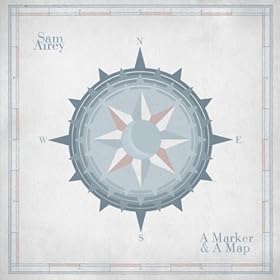
REVIEW: Sam Airey - A Marker And A Map EP


*Originally published for For Folk's Sake (26/3/12)

A Marker And A Map is a fitting title for Sam Airey's latest EP, as it is analogous to the many journeys that he finds himself on throughout the record. From hesitant ramblings to shrewd lyrical observations, Airey is candid about his experiences growing up in a world that shuns the rural life that he is so accustomed to. And he does this through four perfectly crafted songs.

Lead single ‘The Unlocking’ opens with a stirring, delicately-picked acoustic that chases Airey’s husky vocal at its heel. The guitar melody is evocative of Bombay Bicycle Club’s ‘The Giantess’ though it is fleshed out with a lilting, tremolo guitar that throws the song into bigger soundscapes. “I waited for the moment when I’d know for sure, that I could see some shelter in your eyes,” reveals Airey’s caution over new love, but he soon jumps with both feet in.

‘The Window’ is full of rich pastoral imagery – the hills where he will lay his body down, the sea where his mind can go wandering – and a motif for the longing of home appears. Airey’s rasping breath is held aloft by stunning free-flowing harmonies and discreet strings detail his every narrated move. It is really pleasing to hear such considered musical accompaniment; you can clearly picture the day when Airey first penned this song.

Country-folk, knee-jerk rhythms whizz through the abundance of things that Airey has learnt on his journey so far, in ‘To All the Pieces of the Puzzle’. We hear that gods do not love but are ignorant to love; that fairytales often promote arrogance over modesty. You cannot fail to notice that this is a more mature song lyrically, regardless of its whimsical allusions.

A flickering banjo, earthy cello, shattered drums and tender strings celebrate Airey passing on the wisdom that he has gained in ‘The Floodgates’: “The water is higher than the floodgates show, the end was always coming, why fear it so?” The song is littered with a variety of instruments, but it remains as raw and organic as the preceding tracks, with Airey’s warm tones simmering until its close.

A Marker And A Map will undoubtedly lull you into its beautiful cradle of lore, naivety, growth and love. If this is what Airey is producing so early into his career, who knows what he is yet to muster.

Friday, 23 March 2012

REVIEW: Jonquil - Point of Go


*Originally published for the Oxford Music Blog (23/3/12)

The closing of one chapter often allows a fresh start for the next. Jonquil are thus in the perfect position, having seen a flurry of line-up changes in recent years with three members leaving to form Trophy Wife and a new member joining the ranks. But have these new dynamics breathed the “new lease of life” that frontman Hugo Manuel had so hoped for? Certainly, but perhaps not to everyone’s taste.
Point of Go is a more light and upfront affair than Jonquil’s previous releases. With the blossoms of spring upon us, this is quite a welcoming sound; the insanely happy bubblegum tones of ‘Point of Go Pt.2’ and the 90s-inspired piano jolts on ‘Getaway’ are charming; the boo-doo-wap harmonies and fiesta drums on ‘Mexico’ have a hunger for warmer climes. Yet there is something irksome about the melodies on the album and it is difficult to pin-point why.
The LP’s first single, ‘It’s My Part’, is carried by cow bell rhythms that syncopate with an animated Foals-esque guitar and Manuel’s narcissistic lyrics, “It’s my part, and I will play it how I want”. It is a catchy song, but not the strongest choice for the album’s lead single. ‘Real Cold’ is similar in its immediacy, with bass, guitar and drums stealing the limelight from the vocals in unison and allowing mature brass instruments to embellish the melody.

‘Run’ sees a simple continuation of the many elementary pop structures that consume the record, save for its bold, reggae-inspired chorus and ‘Swells’ is a throw-away track. But with the album’s many blunders, however, comes its promises. It is the reserved tracks that ironically shed the most joy.‘Psammead’ is a pretty instrumental, laced with a forlorn piano that trails behind a desert guitar riff. It plays for just over 60 seconds, but it stays with you long after the album’s close. The progressive, ‘History Of Headaches’ projects uncanny Chad Valley (Manuel’s side project) harmonies, with Kid-A era keys and thrashing tom toms and resonates just as much as ‘Psammead.’

But it is the buyout vocals, ethereal guitars and glitch synths in, ‘This Innocent’, that really demonstrate the band’s potential, even if the song harks to Jonquil’s by-gone, edgier sound.

It is this nostalgic feeling that swamps your listening: there is something missing in their reincarnation. Their darker sound has virtually disappeared and the line-up adjustments seem to have curbed their openness to experimentation. For some listeners, this breezier sound will be an unwelcome change, but for others it is the start of an exciting new chapter.

6/10